
What is Coconut Sugar: Everything You Need to Know About It
Share Post:
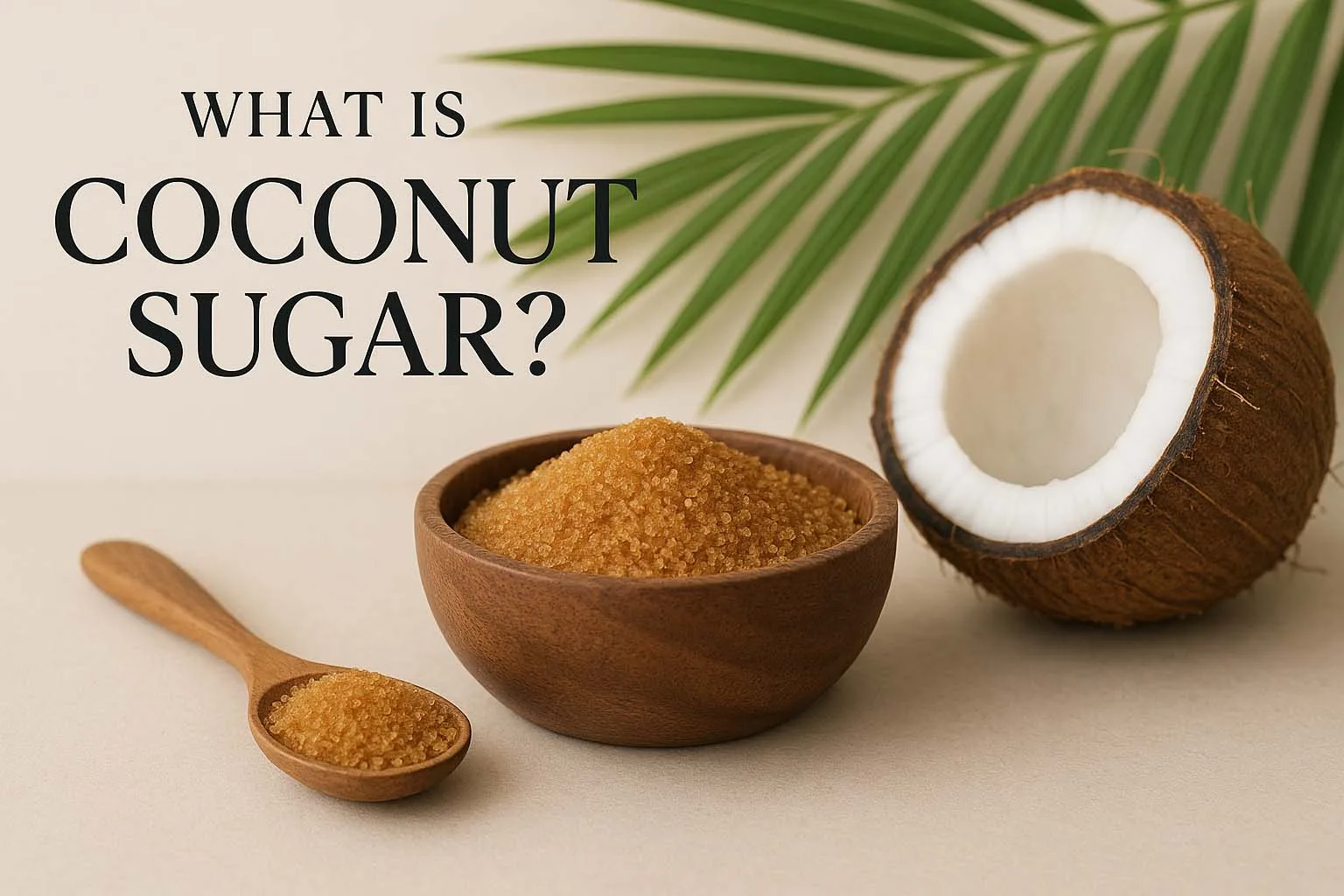
What is Coconut Sugar : Everything You Need to Know About Coconut Sugar
Have you noticed coconut sugar popping up everywhere, from your favorite coffee shop to the baking aisle at the grocery store?
It’s often presented as a natural and sustainable choice, but what’s the real story behind this popular sweetener? Is it truly a better option for you, or is it just another sugar with a different name?
This guide will walk you through the entire journey of coconut sugar, from the tree to your kitchen. We’ll give you a comprehensive overview of its unique properties, health profile, and uses. This article serves as the central hub for our content, designed to provide a clear starting point before you dive into our more detailed guides on specific topics like its production process, health benefits, and where to buy it.
What Makes Coconut Sugar So Special?
How Coconut Sugar Is Made?
The first thing that sets coconut sugar apart is its source. Unlike regular table sugar, which comes from sugarcane or sugar beets, coconut sugar is a product of the sweet nectar from the coconut palm’s flower blossoms. This unique origin story is a big reason why it became a popular sweetener in recent years.
What’s truly unique is the minimal processing it undergoes. While regular sugar is heavily refined, it is simply the crystallized sap. This method allows it to hold onto small amounts of minerals and a type of fiber called inulin. It’s not a health food by any means, but it’s not an empty calorie either.
Making coconut sugar is a simple, two-step process that has been practiced for centuries in Southeast Asia. The journey begins with farmers making a small incision in the tree’s flower buds to collect the sugary sap. This process doesn’t harm the tree and allows it to continue producing coconuts and more sap, making it a highly sustainable practice.
Once collected, the sap is boiled over a fire until the water evaporates and a thick, brown syrup remains. This syrup is then left to cool and crystallize before being broken up into the granules we find in stores. For a detailed look at this fascinating process, see our guide on How Coconut Sugar Is Made: From Tree to Table.
Nutritional Profile: What You Need to Know
Coconut sugar is still sugar, but it offers clear advantages over refined white sugar. It retains small amounts of minerals like iron, zinc, calcium, and potassium, and has a lower glycemic index (GI) thanks to inulin, which helps slow sugar absorption. This means it may cause fewer energy spikes compared to regular sugar.
Used in moderation, it is a more natural, wholesome, and mindful alternative, making it a smarter choice for those balancing taste and wellness.
Is it Nutritionally Better Than Sugar?
Yes — it does offer advantages over white sugar. While both are sweeteners and should be enjoyed in moderation, coconut sugar is less processed and retains trace minerals like potassium, magnesium, calcium, and zinc that are completely absent in refined sugar.
Beyond nutrition, it also delivers a richer, caramel-like flavor and comes from a sustainable source.

The Health Benefits of Coconut Sugar: What Science Says
The scientific community has looked at the properties of coconut sugar, particularly its low glycemic index. Some studies suggest that the inulin content can help slow the absorption of glucose into the bloodstream, which is a potential benefit for managing blood sugar levels.
However, experts caution that it is not a “free” sugar and should not be used as an unlimited substitute. Its antioxidant content is also often touted, , but the levels are not significant enough to provide major health benefits on their own.

Is It Good for Diabetics?
Comparing Coconut Sugar vs. Other Sweeteners
One of the most common questions is how coconut sugar stacks up against other sweeteners. The difference lies in their source, processing, and flavor.
| Aspect | Coconut Sugar | White Sugar | Brown Sugar |
|---|---|---|---|
|
Source |
Coconut Palm Sap |
Sugarcane or Sugar Beets |
Sugarcane, with molasses added back in |
|
Processing |
Minimally Processed |
Highly Refined |
Refined White Sugar
|
|
Flavor Profile |
Caramel & Nutty
|
Purely Sweet & Neutral
|
Molasses & Rich
|
|
Nutrients |
Trace Minerals & Inulin |
None |
Trace Minerals from Molasses
|
|
Glycemic Index |
Lower (35-54) |
High (65)
|
High (64)
|
|
Sustainability |
Very sustainable crop
|
Varies |
Varies |
For a more detailed comparison of flavor and health, you can see our article on Coconut Sugar vs Brown Sugar: Which is Healthier?
Use of Coconut Sugar in Everyday Cooking
It is a versatile ingredient in the kitchen, making it a fantastic substitute for traditional sugar in a variety of recipes. Its deep, caramel-like flavor adds a lovely richness to baked goods, sauces, and beverages.
- Baking: You can use it as a one-to-one replacement in most recipes. Keep in mind it can absorb moisture differently, which may affect the texture of your baked goods.
- Beverages: Its nutty flavor complements the rich flavors of coffee and tea without the harsh sweetness of white sugar. Find out why it’s the Perfect Sweetener for Your Coffee and Tea.
- Sauces: Its caramel notes make it a great addition to savory glazes, marinades, and stir-fry sauces.
What People Ask About Coconut Sugar?
What is coconut sugar and how is it made?
It is a natural sweetener made from the sugary sap of the coconut palm’s flower blossoms. The sap is collected, heated to evaporate the water, and then left to cool and crystallize into granules. This minimal processing helps it retain some of its natural nutrients.
Is coconut sugar healthier than regular sugar?
It’s often called healthier because it’s less processed and has a lower glycemic index. However, it’s still a sugar with the same calorie count as regular sugar. The key is always moderation, as the nutritional benefits are minimal.
Does it tastes like coconut?
No, despite its name, it does not taste like coconut. Its flavor is rich and nutty, with delicious notes of caramel and butterscotch. It is very similar in taste to brown sugar but with a deeper, more complex flavor profile.
Is coconut sugar good for people with diabetes?
Because of its lower glycemic index, some people with diabetes may prefer it. However, it’s not a sugar-free product and still impacts blood glucose levels. Anyone with diabetes should consult a doctor or dietitian and monitor their intake carefully.
Is coconut sugar a healthier sugar?
When you compare it to highly refined white sugar, it can be considered a “healthier” choice due to its natural origin and lower GI. But from a pure calorie and carbohydrate perspective, it is essentially the same as other sugars. Its main benefit is its natural origin and unique flavor, not its nutritional density.
Where can I buy coconut sugar?
You can buy coconut sugar at most supermarkets, organic stores, and online marketplaces. To ensure quality, always look for pure, unrefined options with no additives. If you’re looking for high-quality coconut sugar, you can buy it here :- Cocosugarite Coconut Sugar


